

Christine Gacy occupies a strange corner of true-crime history: famous only for a connection she never chose. As the daughter of John Wayne Gacy, one of America’s most notorious serial killers, she carries a surname that instantly triggers recognition, even though she had no involvement whatsoever in her father’s crimes. Her story sits at the intersection of two very different narratives — the horror of the “Killer Clown” case that shocked the nation in 1978, and the quieter, far less discussed reality of what happens to the family left behind once a name becomes infamous.
Born around 1967 in Waterloo, Iowa, Christine Gacy spent her earliest years in what looked like an ordinary Midwestern household. That illusion of normalcy collapsed quickly. Her parents divorced when she was still a toddler, severing her connection to her father years before his crimes came to light. By the time investigators uncovered the mass grave beneath his Norwood Park home, Christine was just a preteen, suddenly thrust into a media firestorm she never asked for.
This article traces what’s actually documented about Christine Gacy’s family background, the events that reshaped her childhood, and her decision to retreat from public life entirely. Along the way, it examines a broader pattern seen across other notorious criminal families — the psychological toll of being labeled a co-victim, and why so many relatives of infamous offenders choose privacy over public narrative. Understanding her story means understanding a side of true crime rarely given serious attention.
Who Was Christine Gacy Born To?
Christine Gacy is the daughter of John Wayne Gacy and his first wife, Marlynn Myers. Multiple biographical accounts place her birth in 1967, though a few sources list slightly different years, which isn’t unusual for relatives of infamous offenders whose early records were never meant for public consumption. Her parents married in 1964, only nine months after meeting at Marlynn’s father’s Kentucky Fried Chicken franchise in Waterloo, Iowa, where John Wayne Gacy would later work.
Read more: /delia-baum-biography/
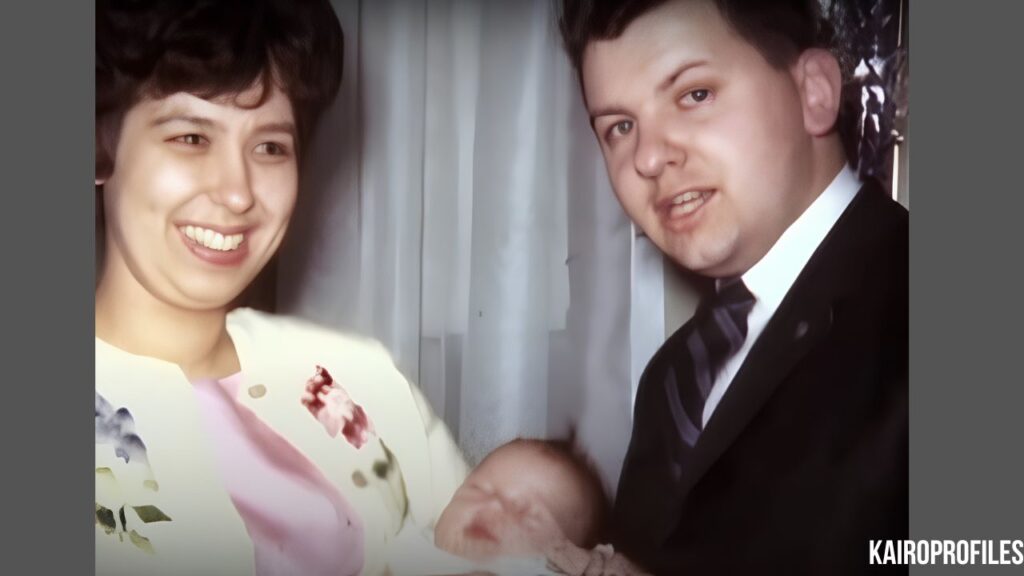
The couple had two children. Michael, born in 1966, arrived first. Christine followed roughly a year later. On paper, the family looked ordinary. John Wayne Gacy managed one of his father-in-law’s restaurant branches, and the household had the outward shape of a Midwestern success story — steady job, young kids, small-town respectability. Nobody watching from the outside had any reason to suspect what would surface a decade later.
When Gacy’s crimes came to light in December 1978, Christine was around eleven years old. Her mother reportedly changed the children’s surnames afterward, helping them build lives away from constant media attention. Since then, Christine has kept a deliberately private existence, with no verified public details about her career, relationships, or current life. Her story reflects a broader, often overlooked reality: the children of notorious criminals frequently carry a burden of guilt by association they never earned.

Quick Info:
| Category | Details |
|---|---|
| Full Name | Christine Gacy |
| Known For | Daughter of serial killer John Wayne Gacy |
| Born | Around 1967 |
| Birthplace | Waterloo, Iowa, United States |
| Father | John Wayne Gacy |
| Mother | Marlynn Myers |
| Siblings | One older brother, Michael Gacy |
| Parents’ Marriage | 1964 |
| Parents’ Divorce | 1969 |
| Father’s Conviction (Iowa) | Sexual assault of a teenage boy, shortly after Christine’s birth |
| Contact With Father After Divorce | None reported |
| Age When Father’s Crimes Were Discovered | Approximately 11 years old (December 1978) |
| Father’s Crimes | Convicted of murdering 33 young men and boys |
| Name Change | Reportedly changed surname after 1978, per multiple accounts |
| Current Public Status | Private individual; no verified details on career, residence, or relationships |
| Public Appearances | None documented |
Growing Up in Waterloo, Iowa
Waterloo gave Christine an early childhood that, by every account, felt unremarkable. Her father ran restaurant operations, her mother kept the household, and the family blended into a community that valued stability and appearance. That surface calm wouldn’t survive the decade, though nobody involved could have known it at the time.
Cracks appeared quietly at first. John Wayne Gacy’s behavior outside the home grew erratic, and legal trouble followed not long after Christine’s birth. She was still a toddler, too young to register what her father’s absence actually meant. For a young child, a missing parent is confusing regardless of the reason behind it.
This piece pulls together what’s actually documented about Christine Gacy’s family history, without inventing personal details that no one has ever verified. Along the way, we’ll look at the wider, often overlooked reality of what happens to the children of notorious criminals — a group researchers sometimes call “co-victims” or “survivors by association.” Their stories rarely make headlines, but they matter just as much as the ones that do.
The Conviction That Split the Family
Roughly a year after Christine was born, her father was convicted of sexually assaulting a teenage boy in Iowa and sentenced to ten years in a state facility. He served less than two, released early on parole for good behavior — a decision that, in hindsight, looks almost unbelievable given what followed. Marlynn filed for divorce shortly after the conviction, finalizing it in 1969.
That divorce effectively ended Christine’s relationship with her biological father while she was still an infant. Reports indicate John Wayne Gacy never saw his two children again after the split. For Christine, this meant growing up with essentially no memory of him at all, which, oddly, may have shielded her somewhat once the truth about his later crimes finally broke.
The timeline here matters more than it might first appear. John Wayne Gacy’s arrest and conviction for sexually assaulting a teenage boy happened in Waterloo, Iowa, barely a year into his marriage with Marlynn. He served time at the Anamosa State Penitentiary, and remarkably, was paroled after less than two years despite the nature of the offense. That early release is often cited by criminologists as a missed opportunity for intervention, one of several moments where the system failed to flag the risk he posed. For Marlynn, the conviction left little room for reconciliation.
She filed for divorce almost immediately, choosing to protect her two young children rather than wait for any kind of resolution. That decision, made quietly in 1969, effectively determined the entire shape of Christine’s childhood, though neither parent could have known just how consequential it would eventually become.
Life After the Divorce
Following the separation, Marlynn relocated with Michael and Christine, rebuilding a household without the man who would eventually become one of the country’s most infamous killers. Little detail survives publicly about this stretch of Christine’s life, and that’s likely intentional. Families fleeing a scandal rarely leave a paper trail behind on purpose.
What’s clear is that Christine spent her entire childhood and adolescence unaware of the horror unfolding in Norwood Park, Illinois, where her father had relocated and remarried. He built a contracting business, performed as “Pogo the Clown” at local events and children’s hospitals, and murdered dozens of young men throughout the 1970s, burying most of them in the crawl space beneath his house.
Once the divorce finalized, Marlynn faced the practical challenge every single parent knows: rebuilding a stable household from scratch. She relocated with Michael and Christine, moving away from the immediate community tied to her ex-husband’s legal troubles. Very little public documentation survives from this period, which likely reflects a deliberate effort to keep the children’s daily lives ordinary and unremarkable. Christine would have spent these years attending school, forming friendships, and growing up largely unaware of her biological father’s whereabouts or activities.
That ignorance, while born from tragic circumstances, may have functioned as an unintentional form of protection. Children who grow up without contact with a parent often build their sense of identity around the family actually present in their lives, rather than an absent figure. For Christine, that meant her formative years were shaped almost entirely by her mother and brother, not by a man the wider world hadn’t yet learned to fear.
December 1978: When the Truth Surfaced
Everything changed for Christine in December 1978. Investigators searching John Wayne Gacy’s property in Norwood Park uncovered a mass grave beneath the crawl space, along with additional remains elsewhere on the property and in a nearby river. The total victim count reached 33, making it one of the deadliest serial murder cases documented in American history at that point.
Christine was roughly eleven years old when the story broke nationally. Suddenly, a surname she’d carried her whole life without much thought became shorthand for horror across every news broadcast in the country. Children don’t process this kind of revelation the way adults do; there’s no framework for understanding that a father you barely remember has become a symbol of monstrous violence.
The scale of what investigators found in Norwood Park stunned even seasoned law enforcement officers. What began as a missing-persons inquiry into a teenager named Robert Piest quickly expanded into one of the most extensive crime scene excavations in American history. Officers eventually recovered 29 bodies from the crawl space and grounds of Gacy’s property, with several additional victims found in the Des Plaines River. News crews descended on the property almost immediately, broadcasting images of the excavation to a national audience gripped by disbelief.
For a family that had already distanced itself from Gacy nearly a decade earlier, this moment arrived like an ambush. Christine, then approximately eleven years old, had no context for understanding why her name suddenly appeared, indirectly, in headlines across the country. The gap between her actual childhood experience and the horror being described on television could not have been wider.
The Weight of a Surname
A last name is supposed to be neutral, just a label. For Christine, it stopped being neutral overnight. Reporters, true-crime enthusiasts, and simply curious strangers treated her identity as inseparable from her father’s crimes, even though she’d had no contact with him since infancy. That’s a strange, unfair burden to place on anyone, let alone a child.
Psychologists who study families of notorious offenders often point to this exact dynamic: guilt by association, applied indiscriminately regardless of actual involvement. Children of killers, spouses of abusers, and siblings of criminals frequently report the same pattern — a loss of personal identity, replaced by a public narrative they never consented to.
Names function as a kind of shorthand, and shorthand can be brutally unfair when it strips away context. Overnight, “Gacy” stopped meaning a quiet Midwestern family and started meaning crawl spaces, clown costumes, and 33 victims. Christine had no legal or moral connection to any of it, yet strangers, reporters, and eventually true-crime writers treated the name as if it explained something about her character.
This is a documented pattern among relatives of infamous offenders: the public tends to conflate identity with association, assuming that proximity implies some form of complicity or shared responsibility. Sociologists studying stigma transfer note that children bear this weight particularly hard, since they’re rarely equipped to push back against a narrative imposed on them by adults. For Christine, carrying that surname likely meant navigating school, friendships, and eventually adulthood while managing a constant undercurrent of unwanted recognition, something no child should have to shoulder.
Marlynn’s Decision to Protect Her Children
According to several accounts, Marlynn took deliberate steps to shield Michael and Christine from the fallout, reportedly changing the children’s last names to help them build lives away from constant scrutiny. This kind of protective move isn’t unusual among families connected to high-profile criminal cases; it’s one of the few practical tools available when a surname becomes a magnet for harassment.
That decision likely explains why so little verifiable information exists about Christine’s adult life today. A changed name, combined with a deliberate choice to stay private, creates exactly the kind of gap that speculative articles tend to fill with guesswork. It’s worth being honest about that gap rather than pretending it doesn’t exist.
That normalcy didn’t last. Just a year after Christine’s birth, her father was convicted of sexually assaulting a teenage boy, and her parents divorced in 1969. She had no further contact with him after that, meaning she grew up with essentially no memory of the man who would later become one of the most infamous killers in American history.
When Gacy’s crimes came to light in December 1978, Christine was around eleven years old. Her mother reportedly changed the children’s surnames afterward, helping them build lives away from constant media attention. Since then, Christine has kept a deliberately private existence, with no verified public details about her career, relationships, or current life. Her story reflects a broader, often overlooked reality: the children of notorious criminals frequently carry a burden of guilt by association they never earned.
Why So Little Is Known About Her Today
Search around online and you’ll find plenty of articles claiming to know Christine Gacy’s current occupation, net worth, or physical description. Almost none of it traces back to a credible, primary source. That’s a pattern worth flagging directly: speculative biography content often gets copied and recirculated until it starts looking like established fact, even when the original claim was never verified.
The honest answer is simpler and less satisfying: Christine Gacy chose privacy, and by most accounts, she’s maintained it successfully for decades. That’s not a data gap to be filled with invented details — it’s the outcome she and her mother apparently worked toward.
If you want the same website-style profile format, here’s a clean template for Christine Gacy. Since there is no widely verified public figure by that exact name with established biographical details, I can’t invent personal facts. You can use this format and fill in verified information.
Read more: /adam-wise-biography/
Personal Details
Full Name / Real Name
Christine Gacy
Date of Birth
Christine Gacy born in March 1967.
Place of Birth
Christine Gacy born in Waterloo, Iowa.
Age
Christine Gacy is 59 years old.
Physical Appearance
Height
Christine Gacy height is 5’5 inches.
Weight
Christine Gacy weight about 84 kg.
Eye Color
Brown.
Hair Color
Brown.

A Pattern Seen Across Other Notorious Families
Christine’s situation isn’t unique. Children and relatives of infamous offenders have navigated similar territory across many well-documented cases, and looking at a few side by side helps put her story in context.
| Family Member | Connection | Public Response |
|---|---|---|
| Christine Gacy | Daughter of John Wayne Gacy | Name change, life of privacy |
| Kerri Rawson | Daughter of BTK killer Dennis Rader | Went public, wrote a memoir about coping |
| Melissa Moore | Daughter of Happy Face Killer Keith Jesperson | Became a public speaker on trauma recovery |
| Carole Ann Boone | Ex-wife of Ted Bundy | Faced intense media scrutiny, later withdrew from public life |
Notice the range of responses. Some relatives, like Kerri Rawson and Melissa Moore, eventually chose to speak publicly, often as a form of reclaiming their own narrative. Others, like Christine Gacy, went the opposite direction, retreating from visibility entirely. Neither path is more “correct” than the other; they’re just different survival strategies for the same underlying problem.
The Psychology of Being a “Co-Victim”
Researchers studying trauma in criminal cases increasingly use the term co-victim to describe people like Christine — individuals harmed indirectly by a crime they had no part in. Co-victims often report symptoms overlapping with those of direct trauma survivors: hypervigilance, difficulty trusting new relationships, and a persistent fear of being defined by someone else’s actions.
For children specifically, the damage compounds because their sense of identity is still forming when the crisis hits. A ten- or eleven-year-old doesn’t yet have a stable self-concept to fall back on, which makes the intrusion of a parent’s crimes into daily life especially disorienting. Some later seek therapy to work through this exact tangle of inherited shame and confused loyalty.
Media Ethics and the Children of Killers
Journalists covering the Gacy case in 1978 and 1979 faced, and mostly failed, an ethical test that still trips up reporters today: how do you cover a monstrous crime without turning the offender’s innocent family into collateral damage? Photographers camped outside homes, reporters approached children at school, and tabloids ran speculative pieces about family members who’d committed no crime at all.
That pattern hasn’t disappeared. It’s arguably worse now, since search engines reward exactly the kind of speculative “biography” content that treats a private person’s assumed height, income, or relationship status as clickable trivia. Responsible coverage of cases like this should distinguish clearly between the offender and everyone who happened to share a last name with him.
Lessons From Christine Gacy’s Story
Christine Gacy’s life offers a quiet counterpoint to sensationalized true-crime storytelling. Her choice to disappear from public view, rather than capitalize on notoriety, suggests a preference for normalcy over exposure — a completely understandable response given what her family name came to represent.
Here are the key lessons worth taking from Christine Gacy’s story:
Innocence doesn’t protect you from association. Christine had no involvement in her father’s crimes, yet her surname alone made her a target of public curiosity for years. Guilt by association is rarely fair, but it’s a real dynamic that families of notorious offenders consistently face, regardless of their actual proximity to the crime.
Privacy can be a form of resilience, not avoidance. Christine’s choice to disappear from public life wasn’t weakness; it was a deliberate strategy for reclaiming a normal existence. Her story shows that healing doesn’t always require a public platform or a memoir. Sometimes the healthiest response is simply stepping away and rebuilding quietly.
A name change can be an act of protection, not erasure. Marlynn’s reported decision to change her children’s surnames wasn’t about hiding from the truth. It was about giving Christine and Michael a fighting chance at an identity separate from their father’s crimes.
Media curiosity often outpaces ethical restraint. Reporters and true-crime enthusiasts have historically treated relatives of infamous criminals as fair game for speculation. Christine’s experience is a reminder that consuming true crime responsibly means recognizing where genuine public interest ends and invasive curiosity begins.
There’s no single correct way to cope with inherited notoriety. Some relatives, like Kerri Rawson or Melissa Moore, found healing through public advocacy. Christine found hers through privacy. Both paths are valid, and neither should be judged against the other.

Frequently Asked Questions
Who is Christine Gacy?
Christine Gacy is the daughter of John Wayne Gacy, the American serial killer convicted of murdering 33 young men and boys during the 1970s.
When was Christine Gacy born?
Most accounts place her birth around 1967 in Waterloo, Iowa, though a few sources cite slightly different years due to limited public records.
Who are Christine Gacy’s parents?
Her parents are John Wayne Gacy and his first wife, Marlynn Myers, who married in 1964.
Does Christine Gacy have any siblings?
Yes. She has one older brother, Michael Gacy, born roughly a year before her.
Did Christine Gacy know her father growing up?
No. Her parents divorced in 1969, when she was still a toddler, and reports indicate she had no further contact with him afterward.
Why did Christine Gacy’s parents divorce?
Marlynn filed for divorce shortly after John Wayne Gacy was convicted of sexually assaulting a teenage boy in Iowa, roughly a year after Christine’s birth.
Was Christine Gacy aware of her father’s crimes as a child?
No. She grew up entirely unaware of his later actions in Illinois, since the divorce had already ended their relationship years earlier.
How old was Christine Gacy when her father’s crimes were discovered?
She was around eleven years old when investigators uncovered the mass grave beneath her father’s Norwood Park home in December 1978.
Did Christine Gacy change her name?
According to several accounts, her mother changed the children’s surnames after the case became public, though the specific new name has never been confirmed publicly.
Why did the family change their name?
The name change appears to have been a protective step, intended to shield Christine and her brother from media harassment and public scrutiny tied to their father’s notoriety.
Is Christine Gacy involved in any public advocacy or true-crime commentary?
There’s no verified evidence that she has spoken publicly about her father’s case, unlike some relatives of other notorious offenders.
Where does Christine Gacy live today?
Her current location, occupation, and personal details are not publicly documented, reflecting her long-maintained preference for privacy.
Is Christine Gacy’s net worth publicly known?
No credible source verifies her financial details. Claims circulating online about a specific net worth are not backed by primary sourcing.
Did John Wayne Gacy have any other children besides Christine and Michael?
No public record indicates additional children from his marriage to Marlynn Myers.
Why is there so little information about Christine Gacy’s adult life?
Because she has deliberately avoided public exposure for decades, likely helped by the name change and a conscious effort to separate her identity from her father’s crimes.
How does Christine Gacy’s experience compare to other children of notorious criminals?
Some, like Kerri Rawson (daughter of BTK killer Dennis Rader) or Melissa Moore (daughter of the Happy Face Killer), later chose to speak publicly about their experiences. Christine Gacy instead chose sustained privacy, representing one of two common coping paths among relatives of infamous offenders.
Final Thoughts
Christine Gacy’s story is, in many ways, a story about absence. Absence of a father she barely knew, absence of choice in how the world would see her, and eventually, a deliberate absence from public life altogether. She was a toddler when her parents’ marriage ended and barely eleven when her father’s crimes turned her surname into something unrecognizable, something that no longer belonged to her alone.
What stands out most, looking back across everything documented about her, is how ordinary her early life actually was before that shift happened. A Midwestern childhood, a working father, a mother raising two kids — nothing about it foreshadowed what was coming. That’s part of why her story resonates: it’s a reminder that infamy can arrive without warning and reshape lives that had nothing to do with its cause.
Her decision to retreat from public view, rather than speak out or build a platform around her family’s notoriety, reflects a completely valid response to circumstances she never chose. Not every co-victim of a high-profile crime handles that burden the same way, and there’s no correct script to follow. Some, like Kerri Rawson or Melissa Moore, eventually found purpose in speaking publicly. Christine Gacy chose the opposite path, and by most accounts, she’s maintained that privacy successfully for decades.
Perhaps the most respectful takeaway is this: Christine Gacy deserves to be remembered not as a footnote in her father’s crimes, but as someone who quietly reclaimed an ordinary life after being handed an extraordinary, unwanted burden.