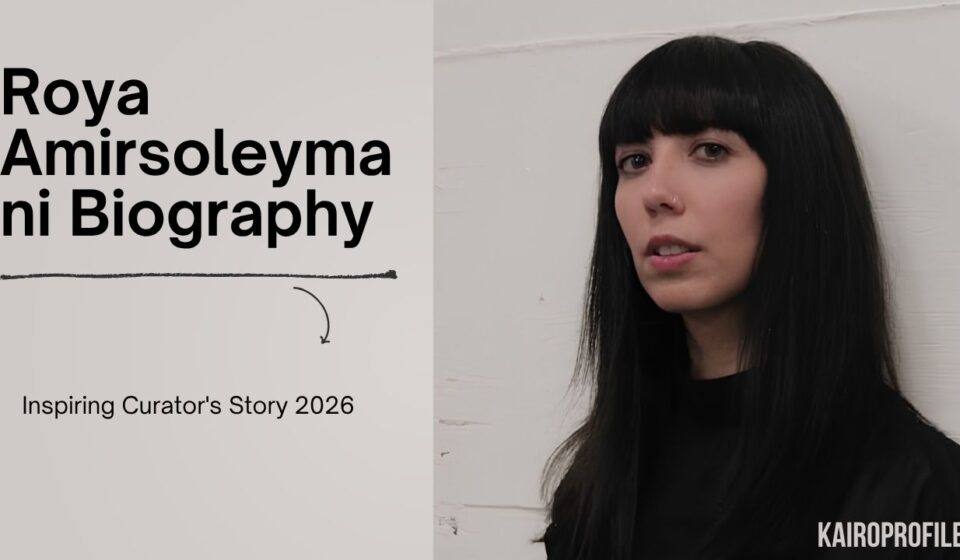

Roya Amirsoleymani has spent more than a decade shaping how audiences experience contemporary art. She is not a household name in the way a museum director or gallery owner might be, but within the world of experimental performance, Roya Amirsoleymani is a name people know well. She built her reputation at the Portland Institute for Contemporary Art, stepped away from that role in 2023, and now works as an independent curator, writer, and artist advocate from a rural property on Washington’s Olympic Peninsula. This article walks through her career, her curatorial philosophy, and the projects that continue to define her work today.
Roya Amirsoleymani has spent more than a decade at the center of contemporary performance and visual art, first as a curator in Portland and now as an independent creative force working from rural Washington. If you’ve followed experimental theatre, interdisciplinary dance, or grassroots artist residencies over the past fifteen years, chances are her name has crossed your path, whether you realized it or not. She built her reputation at the Portland Institute for Contemporary Art (PICA), where she spent twelve years co-curating the renowned Time-Based Art Festival, before stepping away in 2023 to pursue a quieter, more independent path.
Today, Roya Amirsoleymani works as an independent curator, writer, creative producer, and artist advocate, splitting her time between producing new interdisciplinary performance work and co-stewarding the Oak Head Artist Residency on the Olympic Peninsula. Her career reflects a broader shift happening across the art world: curators who move fluidly between programming, fundraising, mentorship, and advocacy, rather than staying confined to a single lane.
This article breaks down everything worth knowing about Roya Amirsoleymani, including her education at the University of Redlands, her twelve formative years at PICA, her role in the Time-Based Art Festival, her grantmaking and mentorship programs, her recent Music Theatre Now Award, and her ongoing work as a writer and residency host. Whether you’re an arts administrator, a performance artist, or simply curious about the people shaping experimental art behind the scenes, this guide covers her full career arc in one place.
Quick Facts
| Category | Details |
|---|---|
| Full name | Roya Amirsoleymani |
| Pronouns | She/her |
| Pronunciation | a-MEER-soli-MARNY |
| Primary roles | Independent curator, writer, creative producer, artist advocate, consultant |
| Former role | Artistic Director & Curator of Public Engagement, Portland Institute for Contemporary Art (PICA) |
| Years at PICA | 2012–2023 |
| Education | B.A., Johnston Center for Integrative Studies, University of Redlands (Contemporary Visual Culture and Women’s & Gender Studies) |
| Current base | Twana and Skokomish lands, Olympic Peninsula, rural Washington |
| Notable project | Oak Head Artist Residency (co-stewarded) |
| Recent honor | Music Theatre Now Award (2025), with artist San Cha |
| Website | royamir.com |
Who Is Roya Amirsoleymani
At her core, Roya Amirsoleymani is a connector. She links artists to audiences, ideas to institutions, and funding to the people who need it most. Her own website describes her practice simply: she curates and facilitates programs where contemporary art, performance, and politics meet. That intersection has defined nearly every project she has touched, from large-scale festivals to quiet, one-on-one artist mentorships.
Read more: /matt-loehr-biography/
She does not fit neatly into a single job title, and that is by design. Over the years she has worked as a programs director, an artistic director, an educator, a grantmaker, and a working writer. Each role feeds the others. A curator who also writes essays tends to think differently about how an exhibition should be framed for an audience. An administrator who has managed grant programs understands, from the inside, how precarious an artist’s income can be. That layered experience is part of what makes her curatorial voice distinct.
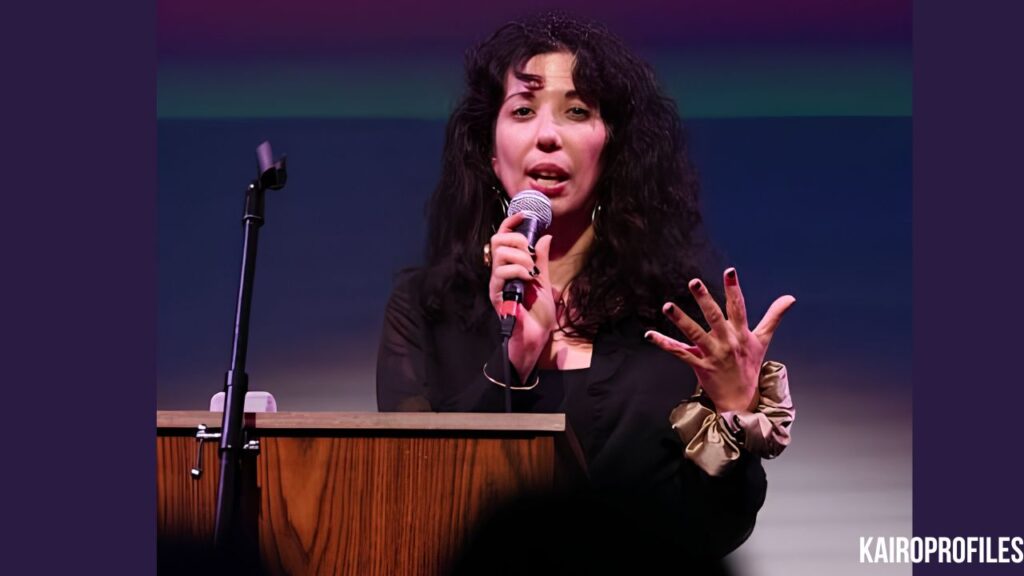
Beyond her formal titles, Amirsoleymani has built a career defined by proximity to artists rather than distance from them. She rarely positions herself as the sole authority in a room; instead, she tends to work collaboratively, co-curating rather than curating alone, and crediting the teams and communities behind every project. That approach shows up in how she talks about her own practice: less about personal achievement, more about sustained relationships with the people she supports. It’s a philosophy shaped as much by her early grassroots organizing instincts as by her later institutional experience, and it explains why so many artists she’s worked with continue to seek her out years later.
Early Education and Academic Foundation
Roya Amirsoleymani’s academic path began at the University of Redlands in California, inside the Johnston Center for Integrative Studies, a program known for letting students design their own interdisciplinary course of study rather than follow a fixed major. She used that flexibility to combine contemporary visual culture with women’s and gender studies, earning an interdisciplinary B.A. She became the first student at the university to graduate with honors specifically in women’s studies, a distinction that speaks to both her academic seriousness and her early interest in questions of representation and power.
During her time at Redlands, she also worked as a research assistant for the art history and women’s studies departments and took part in curatorial and music management projects, along with theatre and film work. That range of activity in college foreshadowed the generalist, multi-hyphenate career she would go on to build. Few curators arrive at the job through a single, linear path, and her education reflects that reality clearly.
The Move to Portland and Early Career
After finishing her studies, Amirsoleymani moved into the Portland, Oregon arts scene, a city known for punching above its weight in experimental and interdisciplinary work. Portland has long supported smaller, artist-driven institutions rather than only large museums, and that ecosystem suited her interests well. It was here that she eventually connected with the Portland Institute for Contemporary Art, an organization that would come to define the next twelve years of her professional life.
Her early titles at PICA included Director of Community Engagement, a role in which she designed and oversaw educational and public programs, audience engagement strategies, and community partnerships. She worked to diversify who showed up to experimental performances, recognizing that avant-garde art often struggles to reach beyond a narrow, already-converted audience. That early focus on access and outreach would remain a throughline in everything she did afterward.
Personal Information
Read more: /katie-deshan-biography/
Full Name
Roya Amirsoleymani
Profession
Roya Amirsoleymani is an independent curator, writer, creative producer, consultant, researcher, and project manager specializing in contemporary art and performance.
Age
Roya Amirsoleymani is 38 years old.
Current Location
She is based on the Olympic Peninsula in rural Washington State, USA.
Education
She holds a BA in Contemporary Visual Culture & Gender Studies, an MS in Arts Management from the University of Oregon, and a Certificate in Nonprofit Leadership from Arizona State University.
Previous Career
From 2012 to 2023, she worked as a director, curator, and artistic/program director at the Portland Institute for Contemporary Art (PICA).
Current Work
She works independently with artists and arts organizations on curating, creative production, research, writing, consulting, exhibitions, performances, and cultural projects.
Twelve Years at the Portland Institute for Contemporary Art
Between 2012 and 2023, Roya Amirsoleymani held the title of Artistic Director and Curator of Public Engagement at PICA, a multidisciplinary center for contemporary and experimental art. In that role, she co-curated the organization’s annual centerpiece event, along with year-round exhibitions, performances, and socially engaged projects. She also designed critical, educational, community-based, and participatory programs meant to widen the circle of who gets to engage with contemporary art.
This was not a narrow curatorial post. Her responsibilities spanned visual art exhibitions, experimental dance and theatre, sound art installations, public programs, publications, artist residencies, community events, and grantmaking. Running that many program areas simultaneously, for over a decade, required a rare combination of artistic judgment and operational discipline. Many curators specialize in one discipline; she moved fluidly across several at once.
The Time-Based Art Festival
The single project most associated with her name is the Time-Based Art Festival, known within the arts community simply as TBA. Held annually in Portland, the festival brings together performance, dance, theatre, lectures, and exhibitions across roughly ten days, spread across warehouses, black-box theatres, indoor and outdoor venues, and PICA’s own space. In a 2022 interview with Oregon Public Broadcasting, marking the festival’s 20th year, Amirsoleymani described the festival as an immersive experience built around bringing the community together to support artists and connect through art and ideas.
She co-curated TBA for many of its most significant years, working alongside fellow curators including Kristan Kennedy. During the 2020 edition, the festival faced its biggest test: whether it could happen at all during the COVID-19 pandemic. Speaking with the Portland Mercury, she recalled that nobody knew, early in the pandemic, how the economic fallout would hit nonprofits or arts organizations. The festival went ahead regardless, adapted to the moment, and became a marker of resilience for Portland’s arts community during an extraordinarily difficult year.
Program Design and Grantmaking Work
Beyond the festival itself, Amirsoleymani built and managed several standing programs at PICA that outlasted any single festival cycle. She designed and helped manage the Creative Exchange Lab, an artist residency program, and the Crucial Bonding initiative, which paired youth with artist mentors of color. She also oversaw the Precipice Fund, a regranting program supported through the Andy Warhol Foundation for the Visual Arts Regional Regranting Program, which redistributed funding directly to working artists and small organizations rather than concentrating it inside a single institution.
This grantmaking work reveals something important about her approach to curating: she treated funding infrastructure as being just as important as programming choices. An exhibition can showcase an artist’s work for a few weeks, but a grant program can sustain that artist’s practice for years. Few curators build both skill sets, but her background across administration, community engagement, and artistic direction gave her the tools to do so.
Curatorial Highlights and Notable Collaborations
Certain projects from her PICA tenure stand out as particularly influential within the field. She established a Guest Scholars and Writers series for the TBA Festival, bringing critical voices into direct conversation with performing artists. She organized a symposium, film screening, and public program series on the historicization of HIV/AIDS, featuring writer and activist Sarah Schulman, in partnership with Visual AIDS for Day With(out) Art. She also co-curated a program titled Remembering to Remember: Experiments in Sound, exploring sonic and audio-based art forms.
More recently, she has worked as an independent producer for new interdisciplinary performance works by artists including San Cha, Ahamefule J. Oluo, Holland Andrews, and yuniya edi kwon. These projects have received support from major funders such as Creative Capital, the Guggenheim Foundation, the National Performance Network, and the MAP Fund, and have been presented by respected residencies, organizations, and festivals both nationally and internationally. In 2025, she and San Cha received the international Music Theatre Now Award for the contemporary opera Inebria me, a recognition that placed her independent producing work on a global stage.
Physical Information
Height
5’7 inches
Weight
Roya Amirsoleymani weight is 59 kg.
Body Measurements
Not publicly available
Eye Color
Hazel
Hair Color
Black / very dark
Hair Style
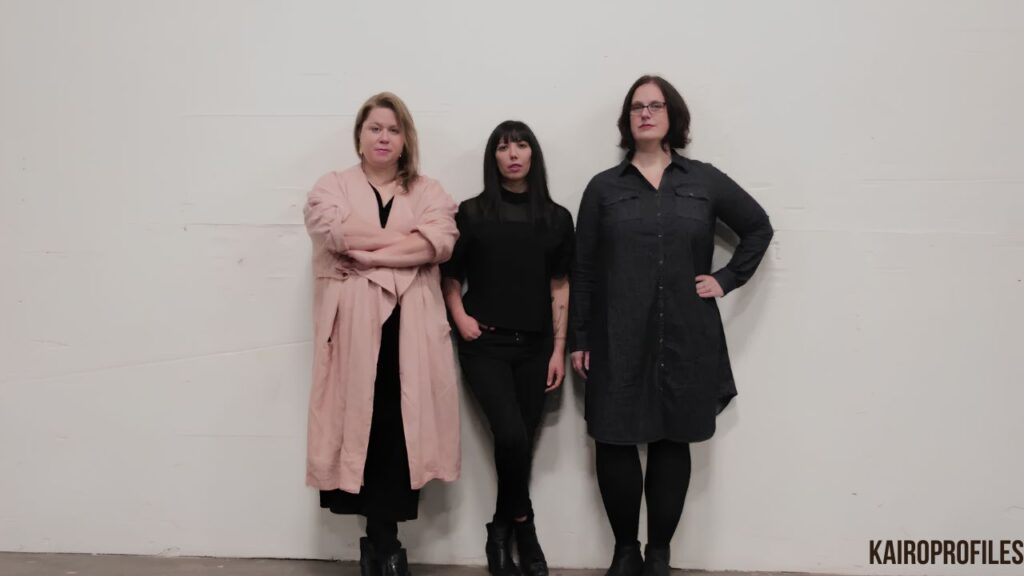
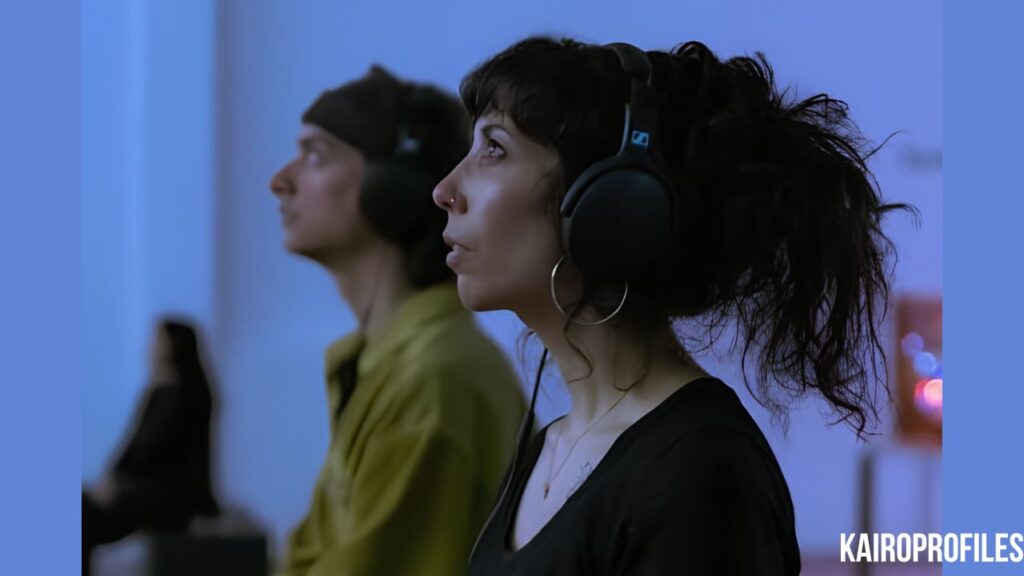
She has been publicly described and photographed with long black hair and bangs.
Distinctive Features
A published professional profile describes her wearing a gold nose ring.
Overall Appearance
Roya is often photographed with a contemporary, artistic style, frequently wearing minimalist or dark clothing.
Leaving PICA and Relocating to the Olympic Peninsula
In 2023, after twelve years, Amirsoleymani left her position at PICA. The decision was not purely professional. In a conversation published through Movement Research’s Critical Correspondence, she explained that her personal life had shifted: she is part of a three-person relationship, and her partners were based in Washington while she remained in Portland. After nearly five years of long-distance commuting, she chose to relocate rather than continue splitting her life across two states.
She has also spoken candidly about resisting the easier path. Rather than take another curatorial job that mirrored her PICA role, and likely inherited the same institutional pressures, she chose to build something new. That decision reflects a broader theme in her career: a willingness to step outside stable, well-known positions in favor of work that better matches her values, even when that means starting over in an unfamiliar place.
Oak Head Artist Residency
On the Olympic Peninsula, Amirsoleymani and her partners now co-steward the Oak Head Artist Residency, an informal residency supporting artists, writers, and musicians of color with time, space, food, nature, and shared resources. The property sits on roughly fourteen acres of mostly forested land, rented from family, on Twana and Skokomish lands. The residency operates on a small, intimate scale rather than as a large nonprofit, and its organizers have been transparent about how it runs financially, including how they cover rent and utilities and maintain the grounds themselves.
The philosophy behind Oak Head echoes the grantmaking work she did at PICA, just translated into a physical, land-based form. Instead of distributing money through an institutional fund, she and her partners distribute access: to quiet, to nature, and to community, specifically for artists who are often underrepresented in mainstream art spaces. It is, in a sense, the logical continuation of everything she built in Portland, minus the institutional scaffolding.
Roya Amirsoleymani as a Writer
Writing has become an increasingly central part of Amirsoleymani’s practice since leaving PICA. She describes herself as an emerging writer and has published art criticism and personal essays across a range of publications, journals, and zines, both in the United States and internationally. She recently self-published and distributed her first chapbook, a notable milestone for any writer working independently, without the support of a traditional publishing house.
She is currently developing a longer project described as an experimental narrative, blending ephemera and archival material, centered on themes of death and friendship. This kind of hybrid, research-driven writing mirrors her curatorial instincts: she is comfortable working across forms rather than choosing a single genre and staying inside it. For a writer who spent over a decade shaping other people’s work for public audiences, turning that same critical attention toward her own voice marks a significant and personal shift.
Advocacy, Equity, and Public Service Work
Amirsoleymani’s commitment to equity in the arts extends beyond her curatorial projects. She has served on the advisory and decision-making body for public art initiatives across Multnomah, Washington, and Clackamas Counties, through the Regional Arts & Culture Council. She has also been involved with Arts Workers for Equity, a group focused on advancing conversations about racial equity, diversity, and inclusion across arts institutions, and pushing that conversation toward tangible, structural change.
This advocacy work is not separate from her curatorial career; it runs underneath it. Nearly every program she built, from the Crucial Bonding mentorship initiative to the Oak Head Residency, centers artists who are underrepresented in mainstream art economies. That consistency, across nearly fifteen years and multiple institutions, suggests it is less a professional strategy and more a genuine, long-held value.
Her Own Words on the Work
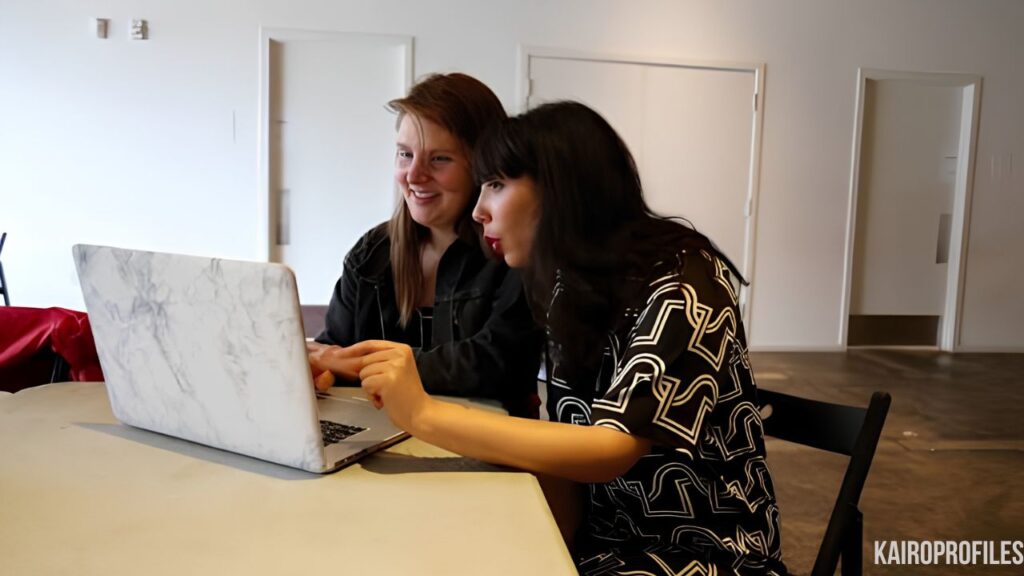
In describing her practice on her personal website, Amirsoleymani talks about working with artists, organizations, collaborators, and partners, and sometimes alone, producing projects at every stage of development. She has said she believes in supporting the ideas, labor, and livelihoods of artists and arts workers, particularly those historically excluded from mainstream art worlds and economies. That belief, more than any single job title, captures what has driven her career from Portland to the Olympic Peninsula.
Colleagues who worked alongside her, including fellow PICA curator Kristan Kennedy, have described a steady curatorial hand during high-pressure moments, including the uncertainty of programming a major festival during a global pandemic. Her interviews, whether with OPB, the Portland Mercury, or KBOO, consistently return to the same themes: community, access, and the idea that experimental art should belong to more people than the small circle who already understand it.
Why Her Career Matters to the Broader Arts World
Roya Amirsoleymani’s story matters beyond Portland because it illustrates a broader shift happening across the contemporary art world. Institutions increasingly rely on curators who can move fluidly between programming, fundraising, community engagement, and advocacy, rather than staying confined to a single specialty. Her twelve years at PICA offer a real-world case study in what that kind of generalist, values-driven curatorial career actually looks like in practice, including its rewards and its limits.
Her decision to leave a stable, respected institutional role and build something smaller and more personal also speaks to a wider conversation happening among arts workers today, many of whom are questioning whether large nonprofit structures are the only legitimate way to support artists. Oak Head Artist Residency, built on rented family land with a handful of people rather than a full staff, offers one alternative answer to that question.
Frequently Asked Questions
Who is Roya Amirsoleymani?
She is an independent curator, writer, creative producer, and artist advocate who spent twelve years shaping contemporary performance and visual art programming in Portland, Oregon.
How do you pronounce Roya Amirsoleymani’s name?
Her name is pronounced a-MEER-soli-MARNY, according to a 2019 KBOO radio interview introduction.
What is Roya Amirsoleymani known for?
She is best known for her role as Artistic Director and Curator of Public Engagement at the Portland Institute for Contemporary Art, where she co-curated the annual Time-Based Art Festival.
Where does Roya Amirsoleymani live now?
She lives on Twana and Skokomish lands on the Olympic Peninsula in rural Washington, where she co-stewards the Oak Head Artist Residency.
What did Roya Amirsoleymani study in college?
She earned an interdisciplinary B.A. from the Johnston Center for Integrative Studies at the University of Redlands, focusing on contemporary visual culture and women’s and gender studies.
Why did Roya Amirsoleymani leave PICA?
She left in 2023 partly due to a personal relocation, choosing to join her partners in Washington after nearly five years of long-distance commuting between Portland and the Olympic Peninsula.
What is the Time-Based Art Festival?
It is PICA’s flagship annual event, an immersive, multi-day festival featuring performance, dance, theatre, lectures, and exhibitions across venues throughout Portland.
What is the Oak Head Artist Residency?
It’s an informal residency Amirsoleymani co-stewards on rural Washington land, offering artists, writers, and musicians of color time, space, food, and shared resources.
What is the Precipice Fund?
It was a regranting program Amirsoleymani oversaw at PICA, funded through the Andy Warhol Foundation, distributing grants directly to working artists and small organizations.
Has Roya Amirsoleymani won any awards?
Yes. In 2025, she and artist San Cha received the international Music Theatre Now Award for the contemporary opera Inebria me.
What does Roya Amirsoleymani write?
She writes art criticism and personal essays, published across journals and zines, and recently self-published her first chapbook. She’s currently developing a longer experimental narrative project about death and friendship.
Which artists has Roya Amirsoleymani produced work for?
She has produced interdisciplinary performance work for San Cha, Ahamefule J. Oluo, Holland Andrews, and yuniya edi kwon.
Is Roya Amirsoleymani involved in arts advocacy?
Yes. She has served on a public art advisory body through the Regional Arts & Culture Council and has been involved with Arts Workers for Equity.
What programs did Roya Amirsoleymani build at PICA?
She designed and managed the Creative Exchange Lab artist residency and the Crucial Bonding mentorship program for youth and artist mentors of color.
Where can you learn more about Roya Amirsoleymani’s current work?
Her personal website, royamir.com, lists her ongoing projects, writing, and consulting work.
Final Thoughts
Roya Amirsoleymani’s career doesn’t follow a conventional arc, and that’s exactly what makes it worth paying attention to. She spent twelve formative years building one of Portland’s most respected experimental art institutions from the inside, then walked away from that stability to build something smaller, quieter, and entirely her own. Few people manage that kind of transition gracefully, but her move from PICA’s Time-Based Art Festival to the Oak Head Artist Residency reads less like a career pivot and more like a natural extension of the same underlying values she’d always held.
What stands out most is her consistency. Whether she was running a regranting fund, mentoring young artists of color, curating a festival during a pandemic, or now hosting artists on fourteen acres of Olympic Peninsula land, the throughline never changes: real, material support for artists who rarely get it elsewhere. That’s a harder thing to sustain than a single flashy exhibition, and it’s part of why her name carries genuine weight within the field.
As she continues developing her own writing and producing new interdisciplinary performance work, it’s clear her influence on contemporary art hasn’t diminished with her departure from PICA. If anything, stepping outside institutional walls has only widened the range of what she’s able to build next.